Harvard’s Wyss Institute Develops New Nanodevice Manufacturing Strategy Using Self-Assembling DNA “Building Blocks”
Novel technology could enable new tools for delivering drugs directly to disease sites in the body.
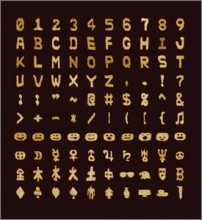 Researchers at the Wyss Institute have developed a method for building complex nanostructures out of short synthetic strands of DNA. Called single-stranded tiles (SSTs), these interlocking DNA “building blocks,” akin to Legos®, can be programmed to assemble themselves into precisely designed shapes, such as letters and emoticons. Further development of the technology could enable the creation of new nanoscale devices, such as those that deliver drugs directly to disease sites.
The technology, which is described in today’s online issue of Nature, was developed by a research team led by Wyss core faculty member Peng Yin, Ph.D., who is also an Assistant Professor of Systems Biology at Harvard Medical School. Other team members included Wyss Postdoctoral Fellow Bryan Wei, Ph.D., and graduate student Mingjie Dai.
DNA is best known as a keeper of genetic information. But in an emerging field of science known as DNA nanotechnology, it is being explored for use as a material with which to build tiny, programmable structures for diverse applications. To date, most research has focused on the use of a single long biological strand of DNA, which acts as a backbone along which smaller strands bind to its many different segments, to create shapes. This method, called DNA origami, is also being pursued at the Wyss Institute under the leadership of Core Faculty member William Shih, Ph.D. Shih is also an Associate Professor in the Department of Biological Chemistry and Molecular Pharmacology at Harvard Medical School and the Department of Cancer Biology at the Dana-Farber Cancer Institute.
[vimeo video_id=”42849360″ width=”500″ height=”350″ title=”Yes” byline=”Yes” portrait=”Yes” autoplay=”No” loop=”No” color=”00adef”]
In focusing on the use of short strands of synthetic DNA and avoiding the long scaffold strand, Yin’s team developed an alternative building method. Each SST is a single, short strand of DNA. One tile will interlock with another tile, if it has a complementary sequence of DNA. If there are no complementary matches, the blocks do not connect. In this way, a collection of tiles can assemble itself into specific, predetermined shapes through a series of interlocking local connections.
In demonstrating the method, the researchers created just over one hundred different designs, including Chinese characters, numbers, and fonts, using hundreds of tiles for a single structure of 100 nanometers (billionths of a meter) in size. The approach is simple, robust, and versatile.
As synthetically based materials, the SSTs could have some important applications in medicine. SSTs could organize themselves into drug-delivery machines that maintain their structural integrity until they reach specific cell targets, and because they are synthetic, can be made highly biocompatible.
“Use of DNA nanotechnology to create programmable nanodevices is an important focus at the Wyss Institute, because we believe so strongly in its potential to produce a paradigm-shifting approach to development of new diagnostics and therapeutics,” said Wyss Founding Director, Donald Ingber, M.D., Ph.D.
Projekt "U Društvu mikroba"

Osnovna svrha projekta je doprinijeti uvođenju, razvoju i održivosti programa društveno korisnog učenja na fakultetima. Više o projektu

Projekt je sufinancirala Europska unija iz Europskog socijalnog fonda
Zanimljivosti
Projekt Virtulab
VIRTULAB je virtualno umrežen znanstveno-istraživački laboratorij za primarne i sekundarne sirovine.
Naša članica, prof. dr. sc. Dijana Škorić u podkistu o koronavirusu i cjepivu
Podkist je podcast Zavoda za komunikacijske i svemirske tehnologije (ZKIST) u kojem se razgovara o znanstvenim i tehnološkim temama te temama povezanim sa studiranjem i učenjem. Cilj je u opuštenoj atmosferi približiti najnovija znanstvena istraživanja široj publici, dati studentima širi pogled na to što uče te poslušati savjete starijih kolega o studiranju, radu i napredovanju u profesionalnoj karijeri.Postani član HMD-a

Cilj Društva je okupljanje mikrobiologa i stručnjaka srodnih struka s ciljem unapređenja svih grana mikrobiologije.
Skupovi HMD-a
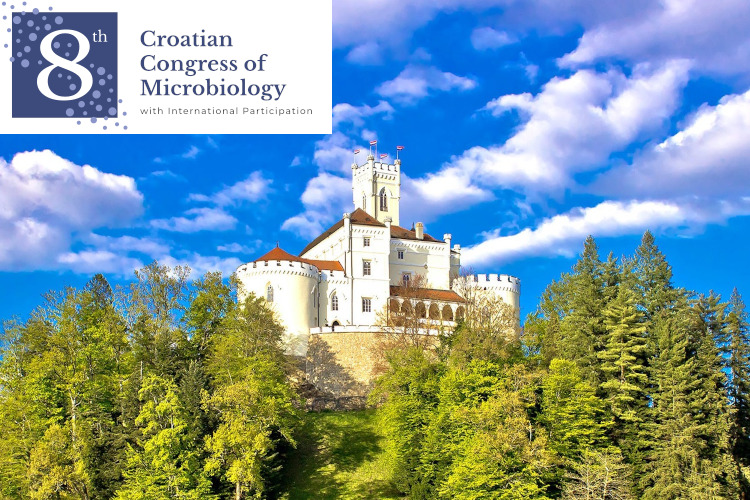
8th Croatian Congress of Microbiology with International Participation
Date: 22 - 25 September 2026
Venue: Trakošćan, Croatia
It is our great pleasure to invite you to the 8th Croatian Congress of Microbiology with International Participation, which will take place at Hotel Trakošćan, Croatia, from 22–25 September 2026.Ostali skupovi

FEMS Regional COLLAB & FEBS3+ Meeting – ÖGMBT Annual Meeting 2026
Date: 14. - 15. September 2026.
Venue: Vienna, Austria

FEMS Summer School for Postdocs
Date: 26–31 August 2026
Venue: Porto, Portugal
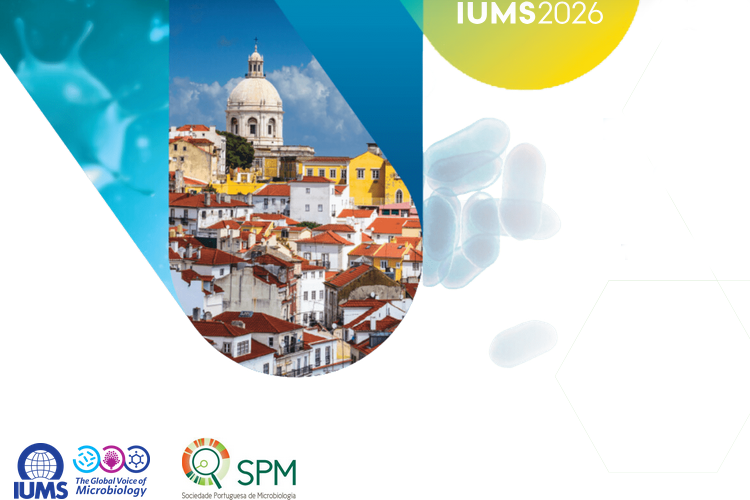
Date: 4-6 November 2026
Venue: Lisbon, Portugal

Poziv za prijavu na ljetnu školu o specijaliziranim mikrobnim metabolitima
Date: od 12. do 20. rujna 2026.
Venue: Dubrovnik, Hrvatska
Izdavaštvo
Priručnik za vježbe iz opće mikrobiologije
Ovaj sveučilišni priručnik napisalo je petnaestak autora iz desetak visokoškolskih ustanova iz Zagreba i Rijeke, a sadržaj je podijeljen u petnaest, slikama bogato ilustriranih poglavlja u kojima su opisane i obrađene različite bakteriološke, virološke, mikološke, imunološke i molekularno-biološke metode koje se upotrebljavaju u općoj mikrobiologiji koja se studira na nizu različitih fakulteta i visokih škola.
Veterinarska imunologija
Radi se o vrhunskoj literaturi za potrebe visokoškolske nastave iz veterinarske imunologije. Knjiga je svojim sadržajem namijenjena prvenstveno studentima, ali i veterinarima u praksi i nastavnicima.
(Iz recenzije)